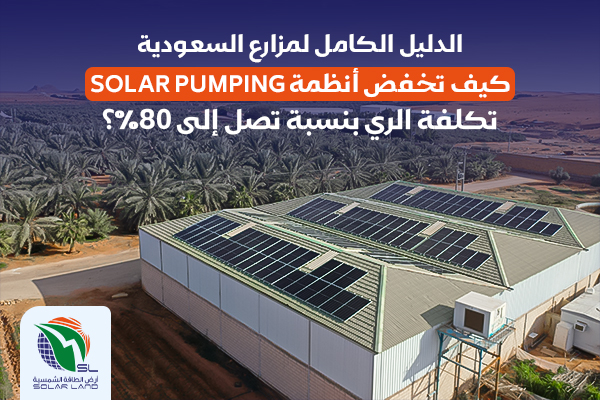
How Can Solar Pumping Systems Reduce Irrigation Costs by Up to 80%?
With rising energy costs and increasing challenges in the agricultural sector, Solar Pumping Systems have become an ideal solution for farmers in Saudi Arabia to achieve high water-use efficiency and significantly reduce operating costs.
In this guide, we explain everything farmers need to know about solar-powered irrigation pumps, including how they work, their types, key advantages, installation costs, and the best companies specialized in installing solar irrigation systems for farms in Saudi Arabia.
What Are Solar Pumping Systems?
Solar Pumping Systems are technologies that rely on solar energy to operate solar water pumps, enabling water extraction from various sources such as wells, rivers, or water tanks to agricultural lands and farms without relying on traditional electricity or fossil fuels like diesel.
These systems are highly efficient in saving energy and reducing solar irrigation costs, with operating cost reductions reaching up to 80% compared to traditional irrigation methods. They also support environmental sustainability by reducing dependence on fossil fuels, making them a reliable choice for farms in Saudi Arabia, where sunlight is available most days of the year.

Main Components of Solar Pumping Systems:
-
Solar Panels: Convert sunlight into direct electrical energy.
-
Water Pump: Either a submersible solar pump or a surface pump, depending on well depth and water source.
-
Water Tank or Distribution Network: Stores water and ensures continuous irrigation even during low sunlight hours.
How Do Solar Water Pumps Work?
Solar water pumps operate by converting sunlight into electricity through solar panels, which then power the pump directly or via an inverter if alternating current (AC) is required.
Solar Pump Operation Steps:
-
Sunlight Absorption: Solar panels capture sunlight and convert it into DC electricity.
-
Pump Activation: The generated electricity powers the pump, whether submersible or surface-based.
-
Water Pumping: Water is transferred from the source to a storage tank or directly to the irrigation network.
-
Water Storage: Stored water ensures uninterrupted irrigation during nighttime or cloudy days.
Types of Solar Pumping Systems
There are several solar pumping system types available in Saudi Arabia to suit different well depths, water demand, and farm sizes. Choosing the best solar pumping system for wells in Saudi Arabia ensures optimal pump performance and maximum benefit from solar energy.
Common Types Include:
-
Submersible Solar Pumps: Installed inside deep wells and capable of pumping large water volumes efficiently.
-
Surface Solar Pumps: Installed outside water sources, ideal for shallow wells and small farms.
-
Hybrid Solar Pumps: Integrated with the power grid or diesel generators as backup, ensuring irrigation continuity in all conditions.
-
Solar-Powered Drip Irrigation Systems: Deliver water directly to plant roots through precision piping, reducing water waste and significantly improving agricultural efficiency.
5 Key Advantages of Solar Water Pumps
Solar water pumps offer multiple benefits that make them the best choice for farms in Saudi Arabia:
-
Significant Irrigation Cost Reduction: Operating costs can be reduced by up to 80% compared to diesel or grid-powered systems.
-
Environmental Sustainability: Powered by clean, renewable energy, reducing emissions and supporting sustainable agriculture.
-
Low Maintenance & Easy Operation: Requires minimal maintenance, mainly panel cleaning and periodic pump inspection.
-
Energy Independence & Reliable Water Supply: Ideal for remote areas without grid access, ensuring uninterrupted irrigation.
-
Improved Water Efficiency & Crop Productivity: Supports modern irrigation methods like drip irrigation, reducing water waste and improving crop yields using an efficient solar pumping system.
Cost of Installing a Solar Pump for Farms & Return on Investment
The cost of installing a solar-powered pump for farms depends on factors such as pump size, well depth, farm area, and the number of solar panels required.
Cost Elements Include:
-
Solar Panels Cost: Based on required power capacity and daily operation hours.
-
Pump Cost: Whether submersible or surface solar pump.
-
Installation & Infrastructure Costs: Including pipes, wiring, tanks, and distribution systems.
Although the initial investment may be higher than traditional pumps, the return on investment (ROI) is very fast:
-
Major fuel savings by replacing diesel with solar energy.
-
Reduced electricity bills and maintenance costs.
-
Higher crop productivity due to consistent irrigation.
According to recent data, farmers can achieve ROI within 2 to 4 years, after which the system delivers net savings and operational cost reductions of up to 80%.
Best Solar Irrigation System Installation Company in Saudi Arabia
To ensure optimal performance and long-term reliability, choosing a trusted company for installing solar irrigation systems for farms in Saudi Arabia is essential.
Solar land is one of the leading companies in this field, offering fully integrated solar pumping solutions tailored to each farm’s needs.
The company provides customized consultations to assess water requirements, well depth, land area, and crop type ensuring the most suitable and efficient system selection.
Contact us today for expert consultation on installing solar-powered irrigation systems for your farm and start reducing costs efficiently.
FAQs
Are solar water pumping systems economically viable?
Yes. They can reduce operating costs by up to 80% compared to traditional electricity or diesel systems and typically achieve ROI within 2 to 4 years.
What is the cost of solar energy for farms?
The cost varies based on system size and components used, including solar panels, batteries, inverters, and pump type.