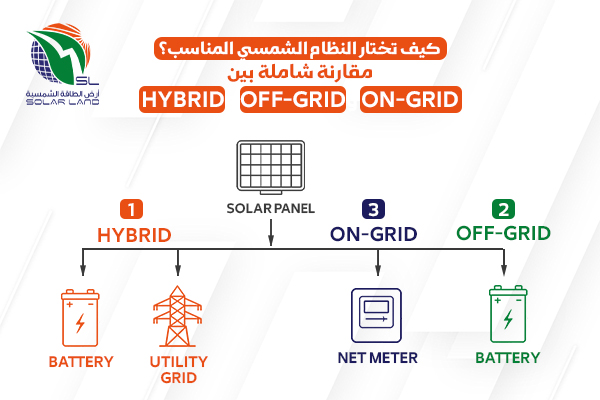
كيف تختار النظام الشمسي المناسب؟ مقارنة شاملة بين On-Grid وOff-Grid وHybrid
هل ترغب في تركيب نظام طاقة شمسية يلبي احتياجات منزلك أو منشأتك بكفاءة ويقلل فاتورة الكهرباء؟ قبل اختيار النظام المناسب، من المهم معرفة الفرق بين on grid وoff grid وhyprid وفهم مميزات كل نظام واستخداماته.
وفي هذا المقال، ستتعرف على أنواع أنظمة الطاقة الشمسية والفرق بين كل نظام وكيفية تحديد النظام الأنسب لك لضمان كفائته واستمراريته.
ما هي أنواع أنظمة الطاقة الشمسية الكهروضوئية؟
من الضروري أولًا التعرف على انواع انظمة الطاقة الشمسية وفهم كيف تعمل كل واحدة منها، وما المميزات التي تميزها عن الأخرى لأختيار النوع المناسب لك، ومن ضمن هذه الأنواع ما يلي:
1. نظام On Grid (متصل بالشبكة)
يُعرف بأنه النظام الذي يولد الكهرباء من الشمس ويوجه الفائض إلى الشبكة مباشرة دون الحاجة إلى بطاريات ويتيح للمستخدم الحصول على صافي القياس في بعض الدول ومن مميزاته أن تكلفة النظام الشمسي منخفضة نسبيًا مقارنة بالأنظمة الأخرى ويتمتع بكفاءة عالية في الأيام المشمسة وسهولة الصيانة.
استخداماته: مناسب للمدن والمنازل التي تتوفر فيها شبكة كهرباء مستقرة ويقوم بتقليل فاتورة الكهرباء بشكل فعال.
2. نظام Off Grid (معزول عن الشبكة)
يعمل نظام off grid بشكل مستقل تمامًا ويخزن الكهرباء في بطاريات لاستخدامها عند الحاجة أو في حال انقطاع الشبكة، ويمتاز النظام باستقلالية كاملة وأنه مناسب للمناطق الريفية أو النائية ويقدم حماية من الانقطاعات المتكررة وتكلفته مرتفعة بسبب البطاريات ويتطلب صيانة دورية مطلوبة لضمان الأداء.
3. نظام Hybrid (هجين)
يجمع النظام الهجين بين مزايا النظامين السابقين، حيث يمكنه العمل متصلًا بالشبكة والاستفادة من صافي القياس وفي الوقت نفسه استخدام البطاريات لتوفير الكهرباء عند انقطاع الشبكة ومن مميزاته استقرار كهربائي على مدار الساعة، مرونة عالية في الاستخدام مما يجعله حل ممتاز للمنازل الكبيرة أو المنشآت التجارية.

الفرق بين أنظمة On Grid وOff grid وHybrid
لفهم الفرق بين on grid وoff grid بشكل واضح وعملي، من الضروري النظر إلى عدة محاور أساسية تؤثر على اختيار النظام الشمسي المناسب لأي منزل أو منشأة تجارية ومنها الآتي:
الاعتمادية: يعتمد نظام on grid على الشبكة ولا يعمل عند الانقطاع أما نظام off grid مستقل بالكامل بينما نظام hybrid فيجمع بين الاعتماد على الشبكة والبطاريات لتوفير الكهرباء دائمًا.
تكلفة النظام الشمسي: يكون الفرق بين on grid وoff grid بشكل جوهري أن النظام المتصل بالشبكة on grid تكلفته الأقل لعدم الحاجة للبطاريات، وعلى الجانب الآخر نظام off grid المعزةل عن الشبكة تكلفته أعلى بسبب البطاريات وبالنسبة للنظام الهجين hybrid فأنه متوسط التكلفة مع قيمة استثمارية جيدة.
الاستفادة من صافي القياس: يكون الفرق واضحًا أيضًا في إمكانية الاستفادة من صافي القياس، حيث يتيح نظام on grid وhybrid توصيل الفائض من الكهرباء للشبكة مقابل تعويض أو تخفيض الفاتورة، بينما نظام off grid لا يتيح هذه الميزة لأنه مستقل تمامًا عن الشبكة.
الصيانة: يتطلب النظام الشمسي on grid صيانة بسيطة للوحاته فقط، في حين أن نظام off grid يحتاج إلى متابعة مستمرة للبطاريات لضمان استمرار التشغيل، بينما نظام hybrid يحتاج صيانة شاملة تشمل الألواح والبطاريات والانفرتر لضمان كفاءة واستقرار النظام على المدى الطويل.
كيف اختار نظام الطاقة الشمسية المناسب؟
إذا كنت تفكر في تركيب نظام شمسي منزلي أو نظام شمسي تجاري، تحتاج أولًا إلى فهم العوامل التي تؤثر على أداء النظام، تكلفته، والعائد من استثمارك على المدى الطويل ولتسهيل الاختيار، سنعرض لك أهم النقاط التي يجب مراعاتها خطوة بخطوة:
تحديد الاستهلاك الفعلي للطاقة
أول خطوة هي معرفة كمية الطاقة التي يستهلكها منزلك أو منشأتك شهريًا من خلال مراجعة فواتير الكهرباء السابقة لتحديد متوسط الاستهلاك مع أخذ أي زيادة مستقبلية في الحسبان، مثل إضافة أجهزة كهربائية جديدة أو توسع في المنزل أو المشروع ويساعدك هذا التقدير على تحديد حجم الألواح الشمسية المطلوب، قدرة الانفرتر وسعة البطاريات، لذلك إذا اخترت نظام off grid أو hybrid يضمن أن النظام يلبي احتياجاتك دون نقص أو هدر في الطاقة.
تحليل موقع التركيب والمساحة المتاحة
يؤثر موقع تركيب النظام بشكل مباشر على كفاءته وإنتاجيته، لذلك يجب أن تتحقق من اتجاه الألواح وزاوية ميله والتأكد من عدم وجود تظليل جزئي من الأشجار أو المباني المجاورة، لأن الظل حتى بنسبة صغيرة قد يقلل الإنتاجية بشكل كبير.
كذلك يجب تحديد مساحة السطح ونوع الألواح الشمسية وعددها لضمان أن النظام قادر على تلبية احتياجاتك بكفاءة.
تحديد الهدف الأساسي من النظام الشمسي
تحديد هدفك من تركيب النظام يسهل اختيار النوع الأنسب:
إذا كان الهدف هو تقليل فاتورة الكهرباء فقط، فإن نظام on grid هو خيار مناسب.
إذا كنت ترغب في الاستقلالية الكاملة عن الشبكة الكهربائية، فإن نظام off grid يوفر الطاقة دون الاعتماد على الشبكة.
أما إذا كنت تبحث عن مزيج من تقليل الفاتورة واستقرار الكهرباء على مدار الساعة، فإن نظام hybrid solar system يجمع بين مزايا النظامين ويوفر المرونة المثالية.
تحديد الميزانية المتاحة
تكلفة النظام تعتمد على نوعه ومكوناته لذلك من خلال تحديد الميزانية بدقة ستكون قادر على اختيار النظام الأنسب الذي يغطي احتياجاتك دون إنفاق زائد أو نقص في الطاقة.
اختيار مكونات عالية الجودة
اختر ألواح وكفاءة الانفرتر والبطاريات المناسبة لك (mono, poly, thin film وlithium/AGM/gel) لتحصل على أداء مستمر وتقليل الأعطال وزيادة العائد على الاستثمار.
التخطيط للصيانة الدورية
من خلال تنظيف الألواح بانتظام وفحص البطاريات والانفرتر والتأكد من سلامة التوصيلات، يمكنك الحفاظ على كفاءة النظام وإطالة عمره الافتراضي.
أفضل شركة تركيب نظام شمسي في السعودية
تعتبر شركة أرض الطاقة الشمسية الأفضل في السعودية لتركيب أنظمة الطاقة الشمسية بفضل خبرتها الطويلة وفريقها المتخصص الذي يضمن تصميم وتركيب الأنظمة بأعلى كفاءة وجودة لضمان استمرارية الأداء وتقليل الأعطال.
تواصل معنا اليوم للحصول على خطة تركيب مخصصة لمنزلك أو منشأتك التجارية.
الأسئلة الشائعة
ما هي تكلفة النظام الشمسي؟
تعتمد تكلفة النظام الشمسي على نوعه وحجم الاستهلاك والمكونات، فإن نظام on grid الأقل تكلفة، بيما نظام off grid تكلفته أعلى، أما نظام hybrid متوسط التكلفة مع قيمة استثمارية جيدة.
هل احتاج بطاريات للطاقة الشمسية؟
في نظام on grid لا تحتاج بطاريات لأنه يعتمد على الشبكة، أما في نظام off grid فهي أساسية لتخزين الطاقة وضمان الكهرباء دائمًا، وفي نظام hybrid توفر البطاريات مرونة إضافية واستقلالية جزئية مع الاستفادة من الشبكة عند توفر الكهرباء.